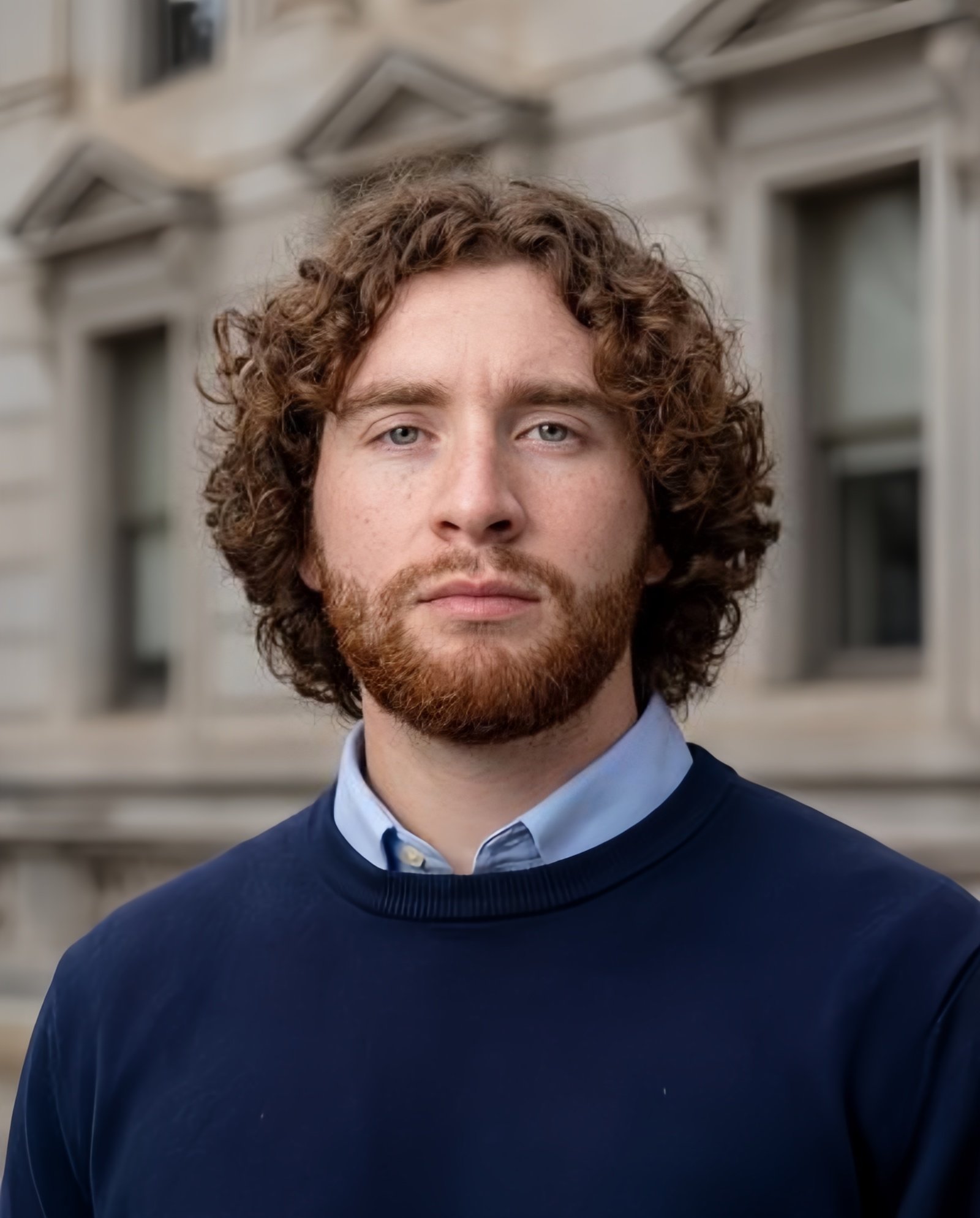
Samuel Schapiro

I am an interdisciplinary scholar studying the science of intelligence, affiliated with the Knowledge Lab at the University of Chicago and the AI Innovation Institute (AI3) at Stony Brook University, and closely collaborating with the Department of Psychology at Pennsylvania State University. My work bridges cognitive science, computer science, and the philosophy of science to advance our understanding of creativity, our ability to elicit it in intelligent machines, and its applications towards scientific, industrial, and artistic domains.

Previously, I was a visiting researcher at the Simons Institute for the Theory of Computing, UC Berkeley. I did my undergrad at the University of Illinois, Urbana-Champaign, where I studied theoretical computer science.

Samuel Schapiro

News

[Oct 2026] New preprint: Measuring Combinatorial Creativity in Large Language Models and Humans.
[Sep 2026] 1/1 papers accepted at NeurIPS 2026.
[Jul 2026] 2/2 papers accepted at COLM 2026; TwistBench accepted as an Oral at the COLM 2026 Workshop on Scientific Understanding of Foundation Models.
[May 2026] 2/2 papers accepted at the ICML 2026 Workshop on Generative AI & Creativity.
[Apr 2026] Received the Lambda AI Research Grant.
[Jun 2025] Best Short Paper Award at ICCC 2025 for Transformational Creativity in Science: A Graphical Theory.
[May 2025] 2/2 papers accepted at ICCC 2025.

Research Areas

My work is organized around three interrelated topics. For a complete list of publications, see my Google Scholar.

I. Measuring the Creativity of AI
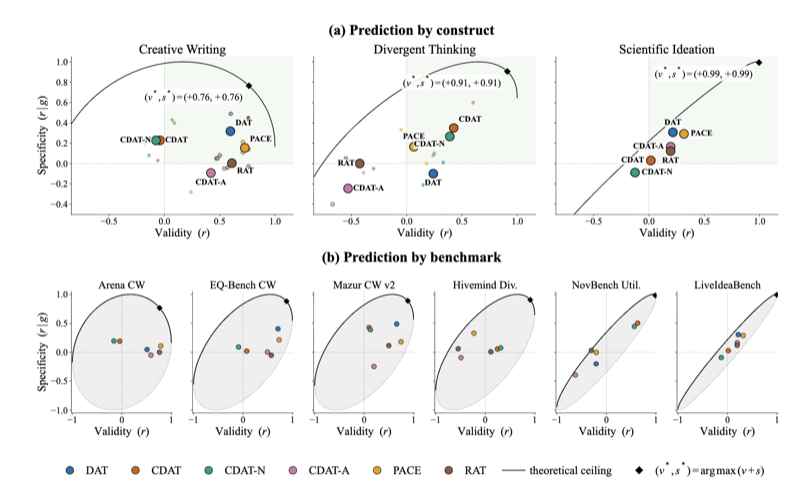
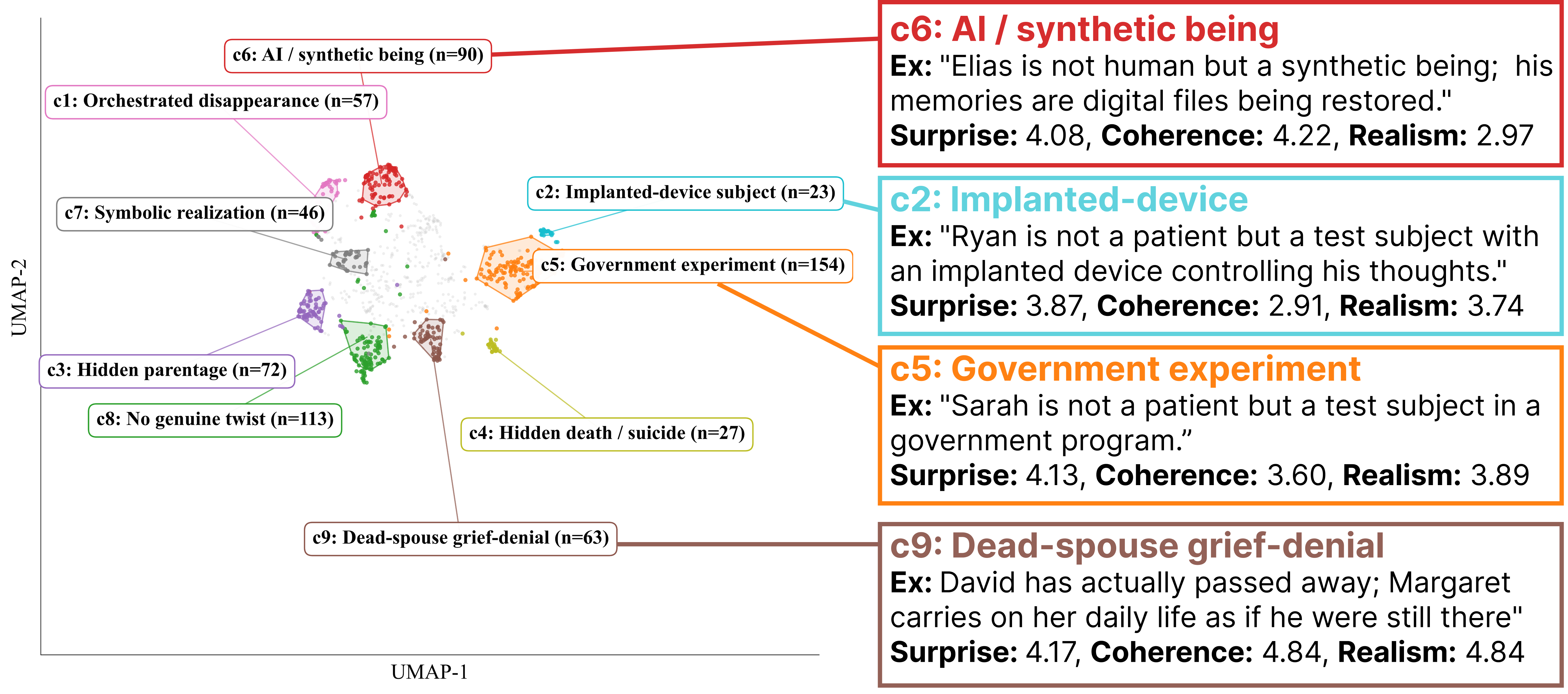
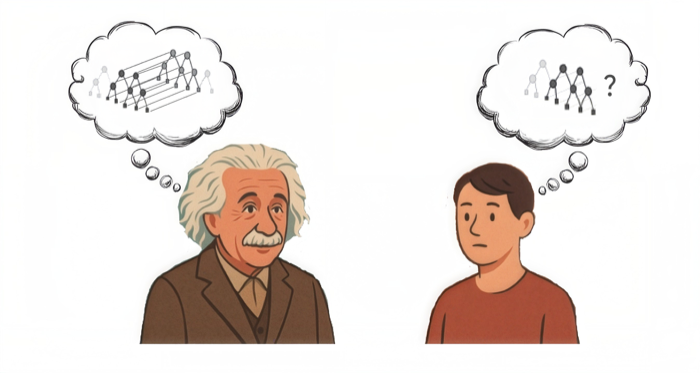
Semantic distance tests plotted against creativity benchmarks UMAP of literary plot-twist clusters from TwistBench Kombine: an expert and a novice combining concept structures, illustrating combinatorial creativity

Benchmarks and tests of creativity, especially more complex forms such as transformational and scientific creativity.

II. Improving the Creativity of AI

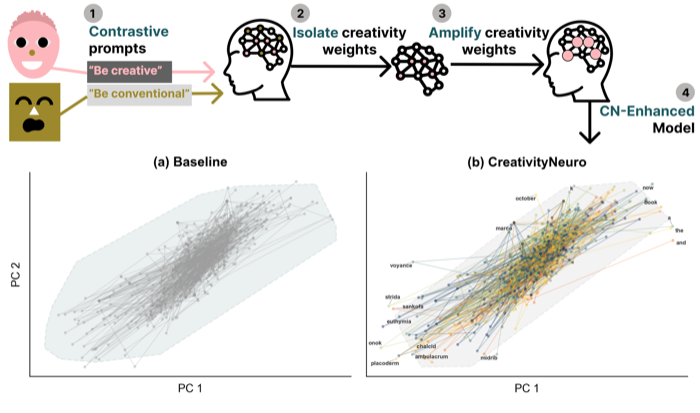
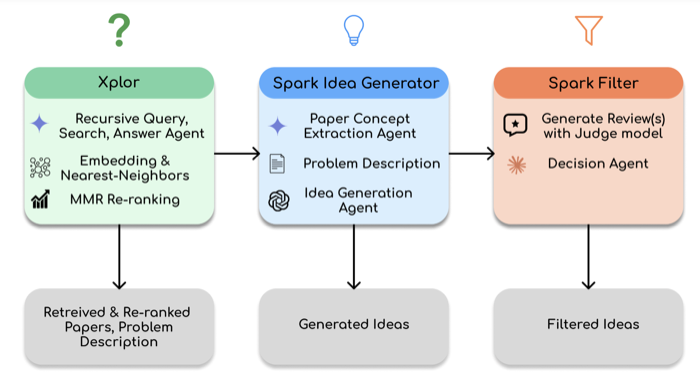
CreativityNeuro weight steering and its effect on generation diversity Spark system diagram: Xplor, idea generator, and filter stages

Methods and systems that make models more creative.

III. Theories and Foundations of Creativity

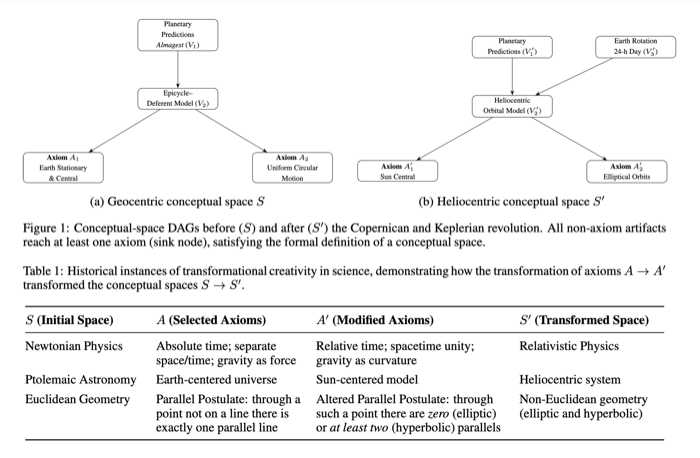
Graphical theory of transformational creativity in science

Formal accounts of what creativity is and how it manifests in minds and machines.

  • Artificial Creative Intelligence S. Schapiro, R. E. Beaty Invited Chapter, Cambridge Handbook of Creativity (3rd ed.), Cambridge University Press. Eds. J. C. Kaufman & R. J. Sternberg. In preparation.
  • Transformational Creativity in Science: A Graphical Theory S. Schapiro, J. Black, L. R. Varshney Proceedings of the 16th ICCC — Best Short Paper Award

Service

Conference Reviewer: ICML 2026, COLM 2026, NeurIPS 2026, AAAI 2026
Journal Reviewer: Proceedings of the National Academy of Sciences (PNAS)
Workshop Reviewer: NeurIPS 2024 Creativity & Generative AI, ICML 2026 Creativity & Generative AI